Today November 13, 2025, 12:34 AM
Today November 13, 2025, 12:34 AM
By TIFFANY STANLEY
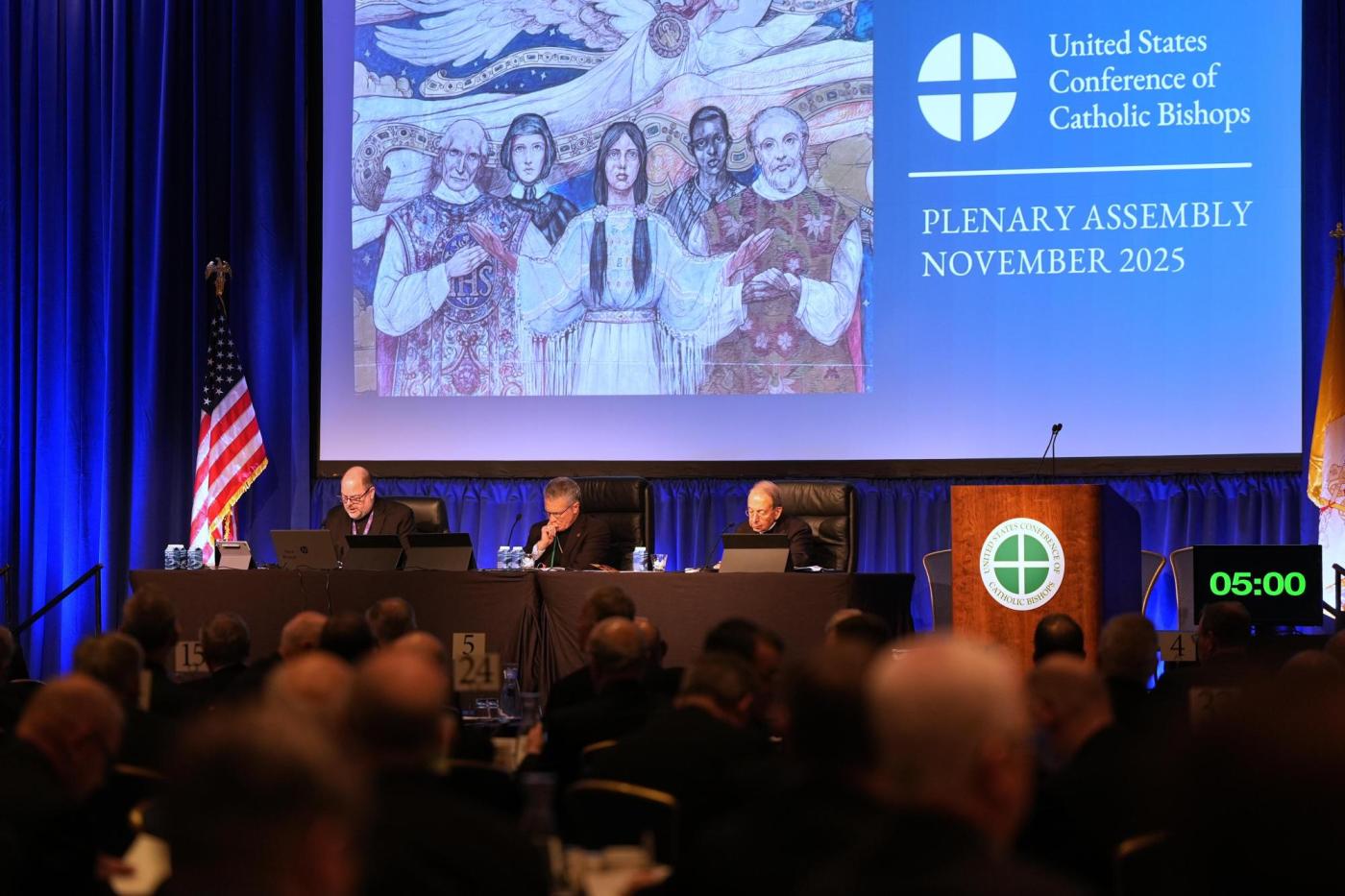
U.S. Catholic bishops voted Wednesday to make official a ban on gender-affirming care for transgender patients at Catholic hospitals. The step formalizes a yearslong process for the U.S. church to address transgender health care.
From a Baltimore hotel ballroom, the bishops overwhelmingly approved revisions to their ethical and religious directives that guide the nation’s thousands of Catholic health care institutions and providers.
More than one in seven patients in the U.S. are treated each day at Catholic hospitals, according to the Catholic Health Association. Catholic hospitals are the only medical center in some communities.
Major medical groups and health organizations support gender-affirming care for transgender patients.
Most Catholic health care institutions have taken a conservative approach and not offered gender-affirming care, which may involve hormonal, psychological and surgical treatments. The new directives will formalize that mandate. Bishops will have autonomy in making the directives into law for their dioceses.
“With regard to the gender ideology, I think it’s very important the church makes a strong statement here,” said Bishop Robert Barron of Minnesota’s Winona-Rochester diocese during the public discussion of the revised directives.
The Catholic Health Association thanked the bishops for incorporating much of the organization’s feedback into the directives. It said in a statement, “Catholic providers will continue to welcome those who seek medical care from us and identify as transgender. We will continue to treat these individuals with dignity and respect, which is consistent with Catholic social teaching and our moral obligation to serve everyone, particularly those who are marginalized.”
The new guidelines incorporate earlier documents on gender identity from the Vatican in 2024 and the U.S. bishops in 2023.
The Catholic Church is not monolithic when it comes to transgender rights. Some parishes and priests welcome trans Catholics into the fold, while others are not as accepting.
“Catholic teaching upholds the invaluable dignity of every human life, and for many trans people, gender-affirming care is what makes life livable,” said Michael Sennett, a trans man who is active in his Massachusetts parish.
Sennett serves on the board of New Ways Ministry, which advocates for LGBTQ+ inclusion in the Catholic Church. In 2024, the group arranged a meeting with Pope Francis to discuss the need for gender-affirming care.
New Ways Ministry’s executive director, Francis DeBernardo, said that for many transgender Catholics he knows, “the transition process was not just a biological necessity, but a spiritual imperative. That if they were going to be living as authentic people in the way that they believe God made them, then transition becomes a necessary thing.”
On the same day that U.S. Catholic bishops were discussing gender identity, the heads of several major progressive religious denominations issued a statement in support of transgender, intersex and nonbinary people, at a time when many state legislatures and the Trump administration are curtailing their rights.
The 10 signers included the heads of the Unitarian Universalist Association, the Episcopal Church, the Union for Reform Judaism and the Presbyterian Church (U.S.A.).
“During a time when our country is placing their lives under increasingly serious threat, there is a disgraceful misconception that all people of faith do not affirm the full spectrum of gender – a great many of us do. Let it be known instead that our beloveds are created in the image of God – Holy and whole,” the religious leaders said in a statement.
The Catholic bishops, wrapping up their conference in Baltimore, overwhelmingly approved a “special message” on immigration Wednesday. Such pastoral statements are rare; the last was in 2013 in response to the Obama administration’s mandate for insurers to provide contraception coverage.
Catholic leaders individually have criticized the Trump administration’s immigration crackdown. Fear of immigration enforcement has suppressed Mass attendance at some parishes. Local clerics are fighting to administer sacraments to detained immigrants.
“We are disturbed when we see among our people a climate of fear and anxiety around questions of profiling and immigration enforcement,” the bishops’ statement reads. “We are saddened by the state of contemporary debate and the vilification of immigrants. We are concerned about the conditions in detention centers and the lack of access to pastoral care.”
In a show of unity, multiple bishops stood up to speak in favor of the statement during the final afternoon discussion, including Oklahoma City Archbishop Paul Coakley, the newly elected president of the conference.
“I’m strongly in support of it for the good of our immigrant brothers and sisters, but also to find a nice balance,” Coakley said, noting that they call “upon our lawmakers and our administration to offer us a meaningful path of reform of our immigration system.”
Chicago Cardinal Blase Cupich walked to the microphone to recommend stronger language around mass deportation. “That seems to be the central issue we are facing with our people at this time,” he said.
His brother bishops agreed. The updated text now states that U.S. Catholic bishops “oppose the indiscriminate mass deportation of people.”