Today November 15, 2025, 11:52 PM
Today November 15, 2025, 11:52 PM
By MIKE CATALINI, GIADA ZAMPANO and PAUL WISEMAN
PHILADELPHIA — Steel: 50%. Copper: 50%. Cars: up to 25%. But an even bigger Trump-era levy looms: 107% on Italian pasta.
Mamma mia.
It started with the U.S. Commerce Department launching what it says was a routine antidumping review, based on allegations Italian pasta makers sold product into the US at below-market prices and undercut local competitors. That has led to a threat of 92% duties, which would come on top of the 15% tariff President Donald Trump’s administration imposed on European exports generally.
The news sent shockwaves through Italy, where 13 producers would be subject to the whopping one-two punch. They say sales in their second biggest export market would shrivel if prices to American consumers more than double. And while the measure would hardly prompt pasta shortages, it still has perplexed importers like Sal Auriemma, whose shop in Philadelphia’s Italian market, Claudio Specialty Food, has been operating for over 60 years.
“Pasta is a pretty small sector to pick on. I mean, there’s a lot bigger things to pick on,” said Auriemma, pointing to luxury items as an alternative.
But pasta? “It’s basic food,” he said. “Something’s got to be sacred.”
Italy is a nation of avid pasta eaters. Less known is that most of the tortellini, spaghetti and rigatoni its factories churn out gets sent abroad. The U.S. accounts for about 15% of its €4 billion ($4.65 billion) in exports, making it Italy’s largest market after Germany, data from farmers’ association Coldiretti show.
The punitive pasta premium has become a cause célèbre for Italy’s politicians, executives and economists. Agriculture Minister Francesco Lollobrigida told lawmakers in mid-October that the government was working with the European Commission and engaging in diplomatic efforts, while supporting the companies’ legal actions to oppose U.S. sanctions.
EU Trade Commissioner Maros Sefcovic addressed reporters in Rome last month, stressing the lack of evidence backing the U.S. decision and calling the combined 107% levy “unacceptable.”
Margherita Mastromauro, president of the pasta makers sector of Unione Italiana Food, told The Associated Press that prices for Italian pasta in the U.S. remain high, and certainly higher than American-made rivals — undermining any dumping claim.
She said that the measures could deal a fatal blow to small- and medium-sized producers. Lucio Miranda, president of consultancy group Export USA, agreed.
“A duty rate of 107% would definitely kill this flow of export,” Miranda, who is Italian, said by phone from New York. “It’s not going to be something that you can just dump on the consumer and move on, life continues. It will definitely be a deal killer.”
The Commerce Department’s investigation started in 2024 after complaints from Missouri-based 8th Avenue Food & Provisions, which owns pasta brand Ronzoni, and Illinois-based Winland Foods, whose multiple brands include Prince, Mueller’s and Wacky Mac.
The office’s review focused on La Molisana and Garofalo, chosen as primary respondents because they are Italy’s two largest exporters, the Commerce Department said in an emailed statement. Any sale price below either producers’ costs or the price they charge in the Italian market would be considered dumping, in line with numerous other reviews of Italian pasta since 1996, it said.
The two companies presented information incorrectly or withheld it, significantly impeding analysis, according to the Commerce Department. And in the face of these alleged deficiencies, the office presented its 92% duty estimate, which it extended to 11 other companies based on an assumption the two companies’ behavior was representative.
“After they screwed up their initial responses, the Commerce Department explained to them what the problems were and asked them to fix those problems; they didn’t,” White House spokesperson Kush Desai said in an emailed response to the AP’s questions. “And then Commerce communicated the requirements again, and they didn’t answer for a third time.”
La Molisana declined to comment when contacted by the AP. Garofalo didn’t respond to a request for comment.
The sanctions would be applied not just to imports going forward, but also the 12 months through June 2024, according to the Commerce Department. It added that only 16% of total Italian pasta imports may be affected. Its final decision is scheduled for Jan. 2, which could be extended by 60 days.
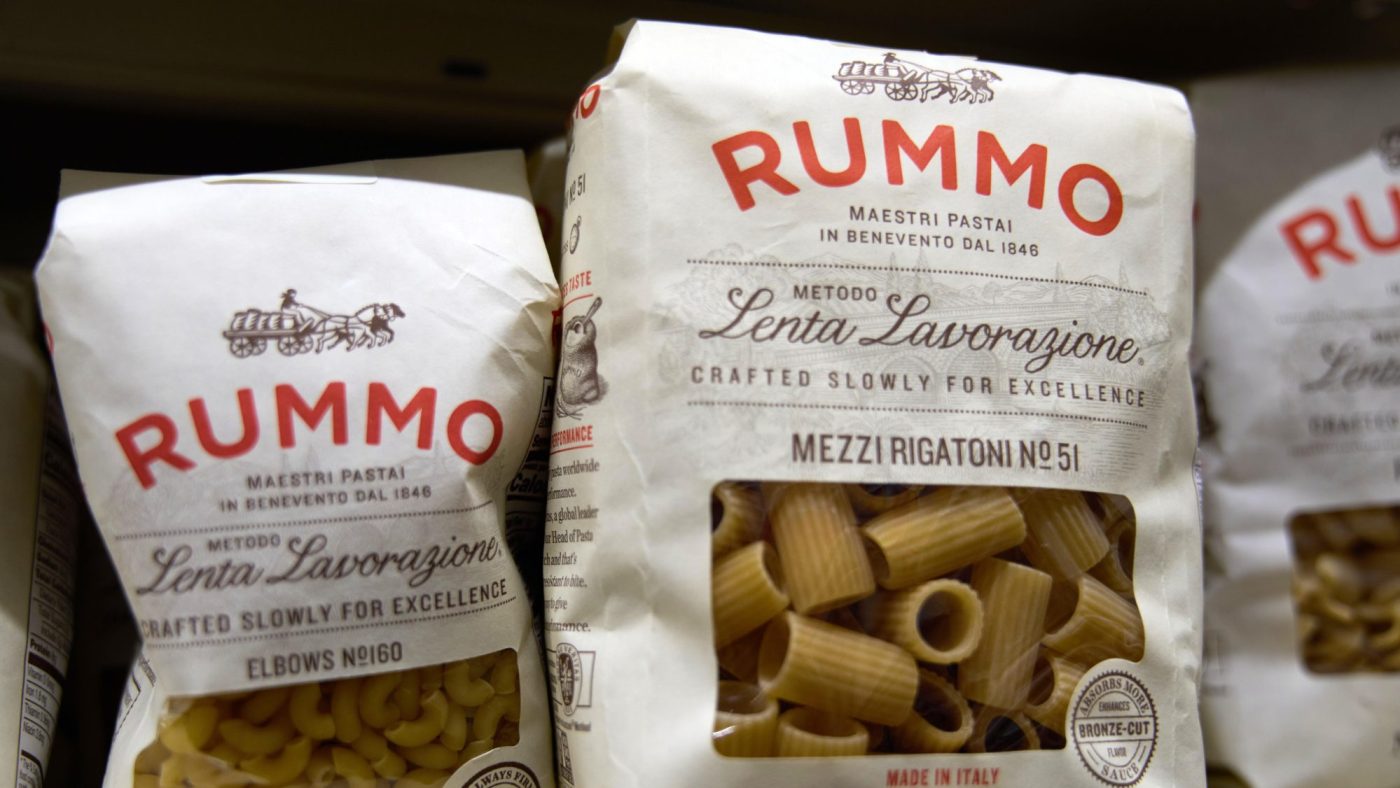
A little over an hour’s drive northeast from Naples is Benevento, a sleepy hilltop town of 55,000 people famed for its ancient Roman theater and Aglianico red wine. It’s also home to Pasta Rummo, founded in 1846, which prides itself on its seven-phase, “slow work” production method.
CEO Cosimo Rummo is outraged by the threat to his company’s annual 20 million euros in exports to the U.S.
“These tariffs are completely senseless,” Rummo said in a phone interview. “These are fast-moving consumer goods … Who would ever buy a pack of pasta that costs 10 dollars, the same price as a bottle of wine?”
He added that he has no intention to start producing pasta stateside, as some companies have done and so would be spared the prospective levy. That includes Barilla, which for decades has been the main Italian pasta brand in the U.S. and now has large-scale production facilities there.
When the transatlantic imbroglio started simmering, Robert Tramonte of Arlington, Virginia sought assurances. The owner of The Italian Store called his supplier, who told him there’s enough pasta inventory stocked in the warehouse to keep prices steady until Easter.
Tramonte’s clients count on him for top-shelf product and he was relieved that, at least for the time being, they won’t have to shell out for the real deal. Or worse — perish the thought! — purchase made-in-America pasta.
“They’ve tried to make Italian products and use the same ingredients, but the source wasn’t Italy,” he said. “And they just didn’t taste the same.”