Today November 28, 2025, 07:20 PM
Today November 28, 2025, 07:20 PM
By Jaewon Kang, Bloomberg News
Underwhelmed and unimpressed are how shoppers are feeling about Black Friday deals so far.
The Repasky family makes a tradition of coming out to Tysons Corner Center shopping mall in Virginia on Black Friday. One change they noticed this year: fewer doorbuster deals and freebies.
Jennifer Schmuck reported the same from Westfield Montgomery Mall in Maryland Friday morning. “I don’t think the deals were as good,” the 50-year-old banker said. Last year Macy’s Inc. gave her a $10 coupon for being among the first in line, but didn’t this year.
Near Philadelphia, Melissa Ritzius, a 50-year-old homemaker, was similarly unimpressed with the sales at the Polo Ralph Lauren Factory Store. Even though the deals looked comparable to last year, with higher listed price they didn’t amount to much of a discount.
One Polo sweater she was eyeing went from $125 last year to $170 this year. “It’s a big change,” she said. Ritzius didn’t end up buying it.
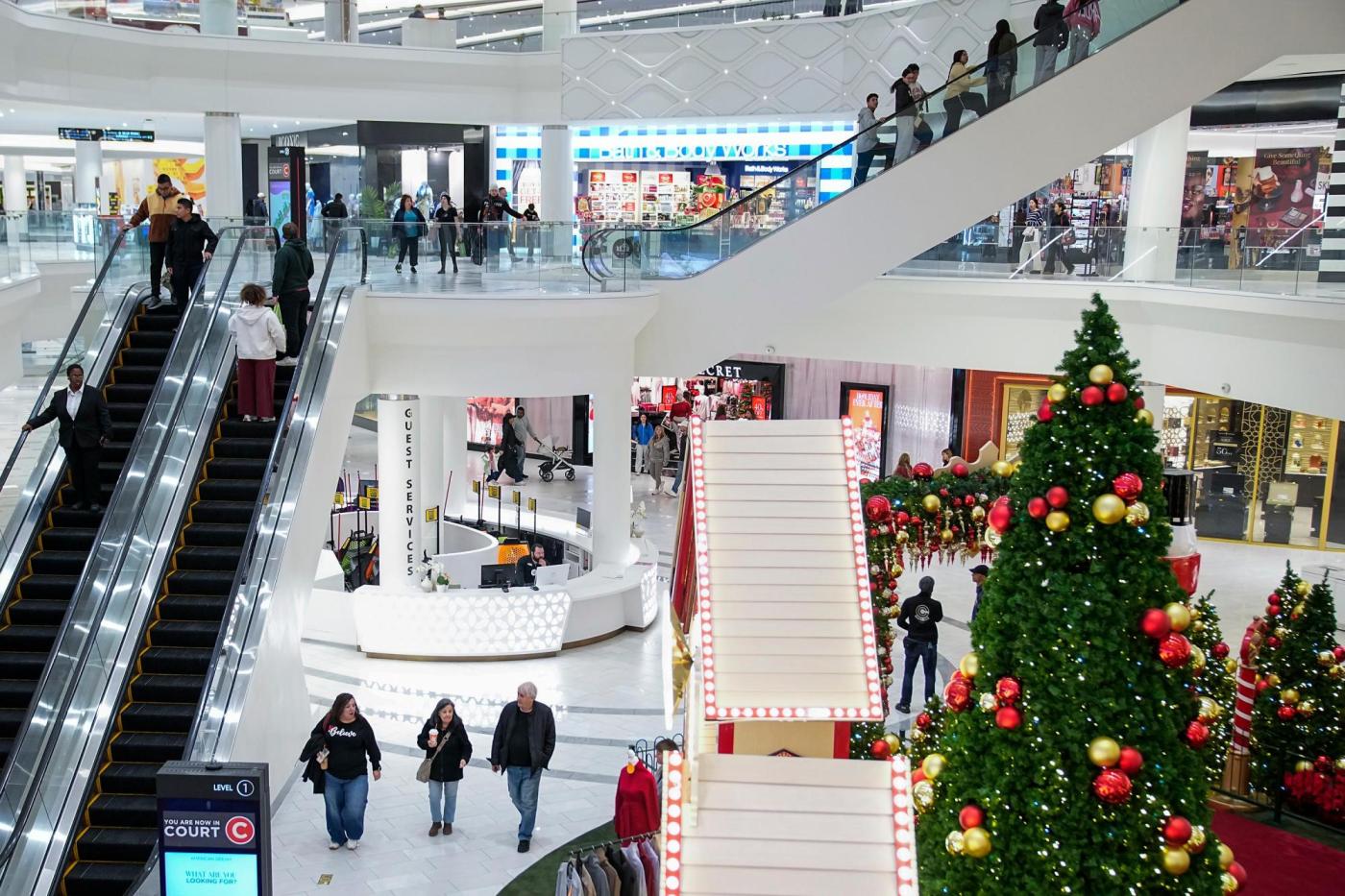
Many shoppers said they came out for the experience of big crowds, yet that too was disappointing for some. Some malls and shopping centers across the U.S., like Patrick Henry Mall in Virginia, were empty Friday morning. Others had lines at a few stores, like Macy’s, Old Navy, Target and Edikted.
“It feels like less than a normal Saturday,” said Nicole Slaughter from the Mall of Georgia in the Atlanta area.
Deontay Phillips, a 26-year-old who serves in the military, who came out for his first Black Friday was underwhelmed by the lack of deals and festivities. “It’s not really what I expected,” said Phillips from a Best Buy Co. store in Newport News, Virginia. “I probably won’t do this again.”
U.S. consumers are heading into the official start of the holiday shopping season Friday with a host of economic concerns, including a cooling job market, stagnant wages, persistent inflation and the looming fallout from tariffs. Black Friday will be a litmus test: Will American shoppers push through growing economic headwinds or will the consumer-powered U.S. economy start to fizzle?
Signs point to a less indulgent holiday season.
“We are not expecting it to be an overzealous, exciting holiday,” said Marshal Cohen, chief retail adviser at research firm Circana.
While overall spending is estimated to be on par with last year, according to Circana, unit sales could fall as much as 2.5%. In other words: People will spend more to buy less stuff.
“The tree is not going to be jammed this year,” Cohen said.
U.S. retailers generate 20% of their annual sales in November and December. This year, companies are competing for an increasingly price-sensitive and anxious consumer. While people are still willing to spend — particularly those in the top 10% of earners — they’re being picky about where they put their dollars. Some shoppers say they’re planning on taking advantage of Black Friday sales not to splurge, but to stock up on essentials.
Tariffs, meanwhile, are making it harder for some brands to offer the big discounts usually associated with Black Friday. And shoppers who venture to stores may encounter longer lines and less help. Seasonal retail hiring is expected to fall to its lowest level since 2009.
“Nothing is discounted enough that it moves the needle where I’m like, ‘oh I don’t need it, but I need to get it now,’” said Jennifer Greenberg, a 29-year-old who lives in New York City, while shopping for a menorah at Bloomingdale’s.
Still, the day won’t be entirely devoid of promotions.
Walmart Inc. is offering discounts on a range of items including 50% off Vizio TVs and a puffer jacket for just $10. Amazon.com Inc. has discounts of up to 50% on beauty products from Lancôme and luxury fragrances from other brands. Target Corp. is offering nearly half off SodaStream machines and up to $200 off on Apple products, in addition to $1 bow ornaments, $5 Barbie fashionista dolls and $10 throws. At Home Depot Inc., some power tools and refrigerators will be 50% off.
Kohl’s plans to be “highly” promotional this holiday season to win over stressed shoppers. Best Buy is predicting a stronger Black Friday than in years past.
Stores are also hoping to draw shoppers in other ways. Target was planning to give away free gift bags to the first 100 customers at every store on Black Friday and will offer exclusive Wicked-themed items and frozen peppermint hot chocolates at the Starbucks locations in its stores. Abercrombie & Fitch Inc.’s Hollister is teaming up with Taco Bell to sell limited-edition merch that will debut on Cyber Monday. Walmart and Target are rolling out a new AI-driven shopping tools to help customers find deals and make purchases more easily.
Consumer spending has held relatively steady this year despite macroeconomic turbulence. Earlier in the year, some shoppers fueled sales with big ticket items they purchased to avoid impending tariffs. Since then, a buoyant stock market has kept people in the top income brackets spending. Many retailers have said that people’s purchasing habits remain consistent and that tariffs haven’t affected prices as much as initially expected.
More recently, however, gloomy signals have started to emerge. Lower-income consumers are pulling back their spending, while US consumer confidence slid in November by the most in seven months. Retail sales growth slowed in September.
Shoppers are likely to gravitate to items that could be hit by tariffs next year, said Jessica Ramírez, managing director at the Consumer Collective consulting firm. People are also purchasing things that bring them joy during an otherwise stressful time, she said. That includes keychains and other accessories to spruce up their handbags and home decor items to brighten up their living space.
In recent years, Black Friday has become less of an event as more shoppers take advantage of fall and online sales, like Amazon’s Prime Day, to get an early start on holiday shopping. That trend is even more pronounced this year, due to tariff fears, said Michael Brown, the Americas retail leader at strategy firm Kearney. That could weigh on overall spending during the next two months, he said.