Today November 30, 2025, 08:28 PM
Today November 30, 2025, 08:28 PM
By DAVID BAUDER
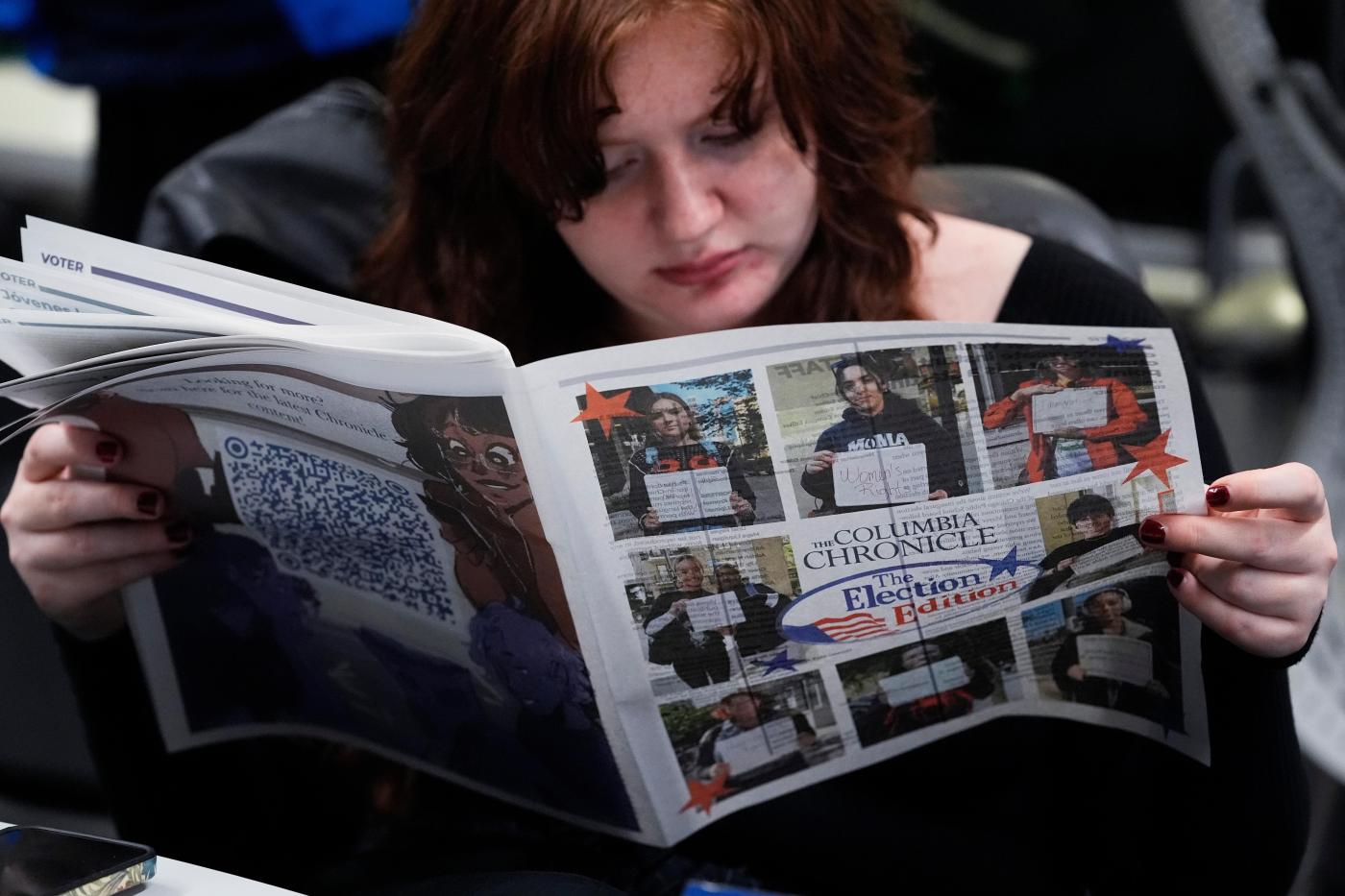
NEW YORK (AP) — Cat Murphy, a college student, has wanted to be a journalist since she was 11. Many of her friends don’t understand why.
When they engage with the news — if they do — they hear a cacophony of voices. They don’t know who to believe. Reporters are biased. They make mistakes. Besides, why would you hitch your future to a dying industry?
“There is a lot of commentary — ‘Oh, good for you. Look what you’re walking into. You’re going to be screaming into the void. You’re going to be useless,’” said Murphy, a 21-year-old graduate student at the University of Maryland’s journalism school.
She is undeterred. And it’s also why she’s not surprised by the findings of a study this fall that documented negative attitudes toward the news media among 13- to 18-year-old Americans. The press rarely fares well in surveys of adults, but it’s sobering to see the same disdain among people whose opinions about the world are still forming.
Asked by the News Literacy Project for one word to describe today’s news media, 84% of teens responded with something negative — “biased,” “crazy,” “boring,” “fake, ”bad,” “depressing,” “confusing,” “scary.”
More than half of the teens surveyed believe journalists regularly engage in unethical behaviors like making up details or quotes in stories, paying sources, taking visual images out of context or doing favors for advertisers. Less than a third believe reporters correct their errors, confirm facts before reporting them, gather information from multiple sources or cover stories in the public interest — practices ingrained in the DNA of reputable journalists.
To some degree, teens reflect the attitudes they’re exposed to, particularly when the most prominent politician of their age has made “fake news” a mantra. Experts say few teens follow news regularly or learn in school about the purpose of journalism.
Journalists don’t help themselves with mistakes or ethical lapses that make headlines. Opinionated reporters or commentators in an era of political division make readers wonder what to believe.
“Some of this (attitude) is earned, but much of it is based on misperception,” said Peter Adams, senior vice president of research and design for the Washington-based News Literacy Project.
There are ways to turn things around, but it will take work.
Many of Lily Ogburn’s classmates get their information from social media. Their parents didn’t watch or read news reports as they grew up, so they didn’t pick up the habit, said Ogburn, a senior at Northwestern University’s journalism school.
Ogburn is the former editor-in-chief at the well-regarded Daily Northwestern student newspaper. The newspaper’s 2023 reports on alleged hazing and racism within the school’s football program led to the ouster of its coach. Still, she found some students don’t understand the newspaper’s role; they believe it exists to protect people in power rather than hold them accountable.
She frequently had to explain what she did to classmates. “There’s a lot of mistrust toward journalists,” she said. But it has firmed her resolve to stick with the profession.
“I want to be a journalist that people trust,” Ogburn said, “and I want to report news that makes people believe and trust in the media.”
The news industry’s financial troubles over the past two decades have hollowed out newsrooms and left fewer journalists on duty. Along with not seeing much legitimate journalism, young people frequently don’t experience it through popular culture — unlike a previous generation, which learned in detail how Washington Post reporters Robert Woodward and Carl Bernstein exposed the Watergate scandal in the Academy Award-winning movie “All the President’s Men.”
When the News Literacy Project asked, two-thirds of teens couldn’t think of anything when asked what movies or TV shows come to mind when they think about journalism. Those who had answers most frequently cited the “Spider-Man” franchise or the movie “Anchorman: The Legend of Ron Burgundy.” Neither portrayal was particularly flattering.
Upon retiring as editor of Newsday, Howard Schneider helped develop the State University of New York system’s first School of Journalism. But instead of teaching future writers, editors or producers, he became drawn to teaching non-journalists about being news consumers.
Now the executive director of SUNY Stony Brook’s Center for News Literacy, Schneider wasn’t surprised about any of the recent survey’s findings, either.
“The negativity, the feeling that news is biased, is just a reflection of how their parents feel,” Schneider said. “The more exposed to news, legitimate news, the more their attitudes turn positive.”
He has developed news literacy programs for school districts. “Students will say, ‘I get my news from YouTube,’” he said. “I say, ‘No, you don’t,’” and explains where the news originates and how to be discerning about what they see.
That’s one of the lessons that 16-year-old Brianne Boyack has taken from her course in news literacy at Brighton High School in Cottonwood Heights, Utah. She had little trust in news going in, but has learned the importance of double-checking sources when she sees something interesting and seeking outlets she’s found reliable.
Her classmate, Rhett MacFarlane, applied what he learned in class to investigate when a friend told him the Louvre was robbed in Paris.
“I’ve learned that there is definitely fact-checking (in journalism),” MacFarlane, also 16, told The Associated Press. “You guys are professionals and you have to tell the truth or you’d be fired. I thought you guys just did whatever you wanted and chose what to say about a topic.”
Still, news literacy programs in schools are relatively rare. Schools already have a lot of subjects to cover to prepare students for the future. And, remember, journalists don’t have the best reputations. It can be hard for educators to stick their necks out for them.
“There’s an inertia here,” Schneider said, “and this is an urgent issue.”
At the University of Maryland, Murphy said she didn’t think there was an inherent hatred toward journalists among her fellow students. “They don’t have any experience reading journalism,” she said.
That’s where she sees the journalism industry needing to make more of an effort. One of the things she finds most frustrating about her chosen field is a resistance to change, particularly an unwillingness or inability to make meaningful use of social media.
“There’s very little movement in the direction of going to where people are, as opposed to expecting them to come to where you are,” Murphy said. “The only way to turn it around is going to be to switch to doing things that captivate people today, as opposed to captivating people 20 years ago.”