Today November 14, 2025, 11:47 PM
Today November 14, 2025, 11:47 PM
By JAMEY KEATEN
BERN, Switzerland (AP) — The first thing that hits you at the World Cheese Awards is the smell.
As the 37th edition — part competition, part a celebration of cheese — kicked off in Switzerland on Thursday, some visitors might wish the offerings had more holes. With descriptions of odors including “stinky socks” and “sick dog,” it’s clearly a festival — and a challenge — for the nose as much as mouths, fingers and eyes.
Welcome to sensory overload.
Connoisseurs, culinary experts and curious consumers flocked to the three-day event in a country where cheese is both food and folklore. The first day got going with the competition, which featured over 5,200 cheeses, nearly one-fifth from Switzerland. Some 46 countries took part, a record count of competitors from Australia to Austria, Bulgaria to Brazil.
All those offerings in the same Bern exhibition hall made for an original mélange of odors. But once past that medley of smells, the sights, flavors and individual scents of the cheeses were tantalizing.
John Farrand, managing director of the Guild of Fine Food in Britain, the event organizer, says some people who tell him they “don’t like cheese, it’s that awful smelly thing” just need to take time and consider the myriad choices.
“I would grab them and sit down with them and take them on that journey through cheese,” he said. “I get so many people say to me just impulsively ‘I don’t like blue cheese’ and that’s impossible really. There’s so much of a range of blue cheese from over here to over here,” — Farrand gestured around the hall — “there’s always a blue cheese for somebody.”
He rhapsodized about a 265-pound wheel of cheese that teams rolled in and “broke” — or cut open — unleashing a powerful cloud of odor.
“The aroma of this Emmentaler just hit me,” Farrand said. “That’s the first time that that cheese has released its greatness and the aroma … just makes you hungry.”
Some may turn up their noses at bacteria-blued “bleu” cheeses or reject the strong odors of varieties like Limberger, Taleggio, “Stinking Bishop” and Époisses de Bourgogne — a Burgundy specialty reputed to be Napoleon’s favorite, and one so stinky that urban legend claims it’s banned from public transport in France.
Others might not get over the hump of hesitation to taste a camel (or buffalo or donkey) cheese, or cringe at unpasteurized or squishy cheeses. More adventurous tasters will try the most gooey or moldy cheeses, looking for the most rich, creamy or meaty varieties on hand.
For the judges, no such compunction: It’s more about scrutiny, savoring, criticism and curiosity.
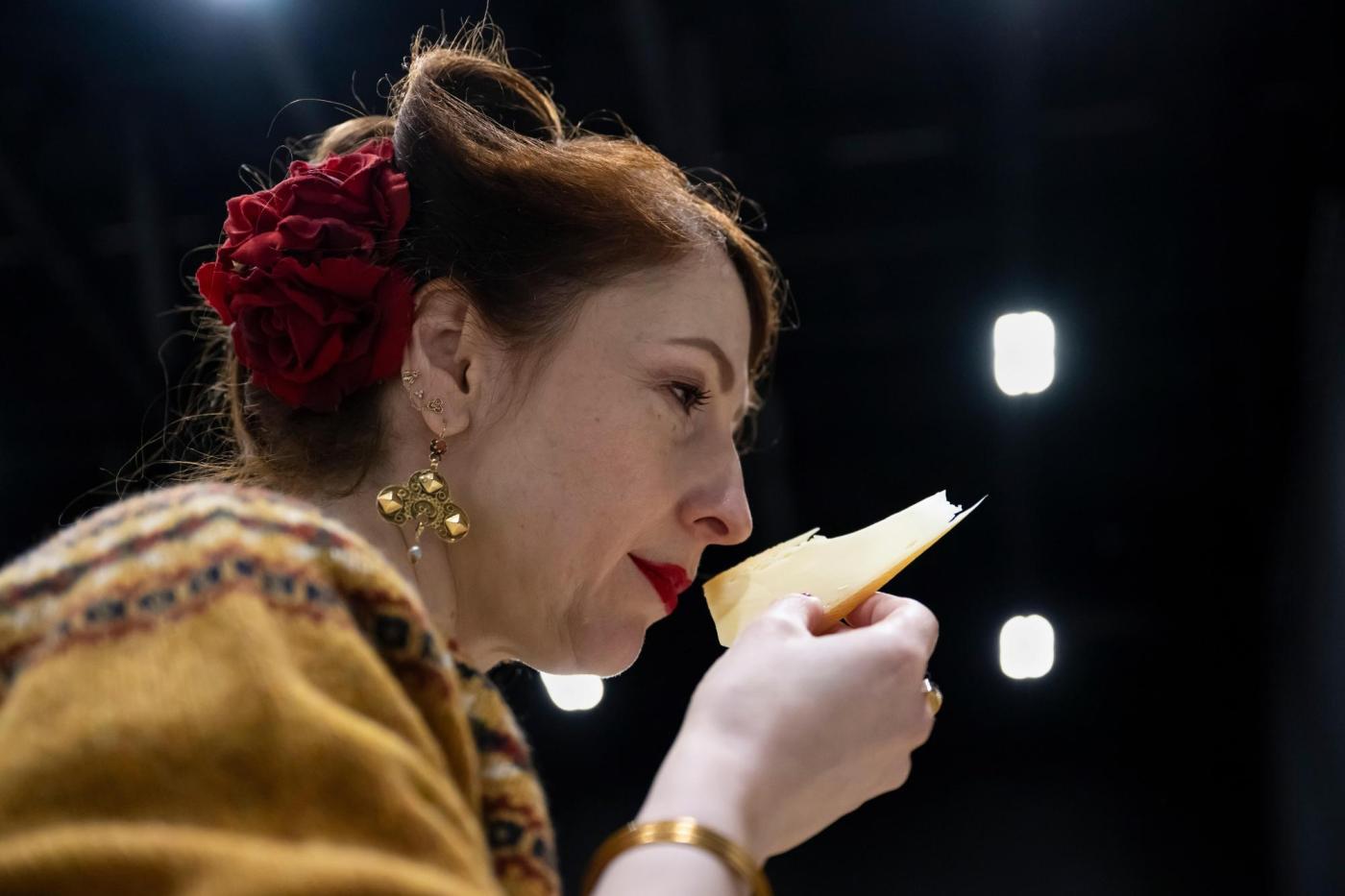
Scores of judges in yellow aprons circled the rows of long, numbered rectangular tables before digging in. They sliced wedges out of hard cheeses and pressed them to their noses, or used spreaders to scoop up soft cheeses, inspecting the consistency and licking or dribbling them onto their tongues.
The judging zone was set off by a waist-high fence and ropes, and security guards kept watch. Journalists were allowed into the area only under escort, and were only allowed to view and smell the cheeses — not taste or even touch them.
It was a blind taste test for the 265-odd judges on hand: All identifying packaging or marking was removed from the cheeses. Their job was to poke, peruse, sniff, touch and taste the offerings — a tall order with so many to choose from — before making their selections for gold, silver and bronze awards based on attributes like aroma, body, texture, flavor and “mouthfeel.”
Only those honored as “Super Gold” made the cut for the glitzy “Super Jury” selection of 14 finalist cheeses. The judges — and the public — only found out where the cheeses were from after the voting on each was completed.
Paul Thomas, a cheesemaker from Urstrom Kaese, south of Berlin, sliced into a blue cheese covered with cherries and billed as having hints of a Manhattan cocktail. After tasting it, he said he was “pleasantly surprised throughout most of that flavor journey.”
“But right at the end it leaves me with something just … it’s a slightly off flavor toward the back of the tongue,” he added.
Experts admit that choosing a winner is tricky. While the final products from the “caseiculture” — the curdling, coagulating, cheddaring and other processes involved in making cheeses — can be judged on aspects like craftsmanship and quality, taste is an individual thing.
This year’s winner was Swiss: A “spezial” Gruyere from the Vorderfultigen Mountain Dairy about 12 miles south of Bern, which scored 85 points from the jury. The raw cow’s milk cheese was drained overnight and dry salted before being matured for more than 18 months.
A creamy, flower-sprinkled “Crémeux des Aldudes aux fleurs” from the village of Etxaldia in French Basque country was runner-up, trailed by a 9-month-aged Swiss Appenzeller Edel-Würzig. Other finalists were from Britain, Japan, the Netherlands, Slovakia and the United States.
Many cheeses come away with other accolades: More than 20 were selected as national or regional “bests” — such as best American, Basque-country, Japanese or Ukrainian cheese. Other trophies were given out by category such as the best cheddar, raw-milk, goat or ewe, or smoked cheeses.
While the U.S. state of Wisconsin hosts the World Championship Cheese Contest and a competition in France selects the world’s best cheesemonger, organizers of the World Cheese Awards say it’s the largest cheese-only event anywhere. The competition started in Britain, but Italy, Spain and Norway have also hosted.
Charlie Turnbull, director of the Academy of Cheese, poked his nose toward a round, soft brownish-orange cheese with a pungent smell caused by the Brevibacterium linens — “a close relative to the kind of bacteria you get in boys’ trainers when they’re about 15 years old.”
“It’s challenging,” Turnbull said with a slight wince. But he added that once one got past the smell, the cheese tasted wonderful, noting “hints of fruit, lots of meaty notes, some ham stock.”
“At the end of the day, taste trumps everything,” he said.