Today December 22, 2025, 11:36 AM
Today December 22, 2025, 11:36 AM
As much of the world celebrates Christmas with joy and public festivities, reports from parts of India tell a more troubling story. In recent weeks, Christian vendors selling Christmas-related goods have faced harassment, obstruction, and intimidation—sparking renewed international concern over the state of religious freedom in the world’s largest democracy.
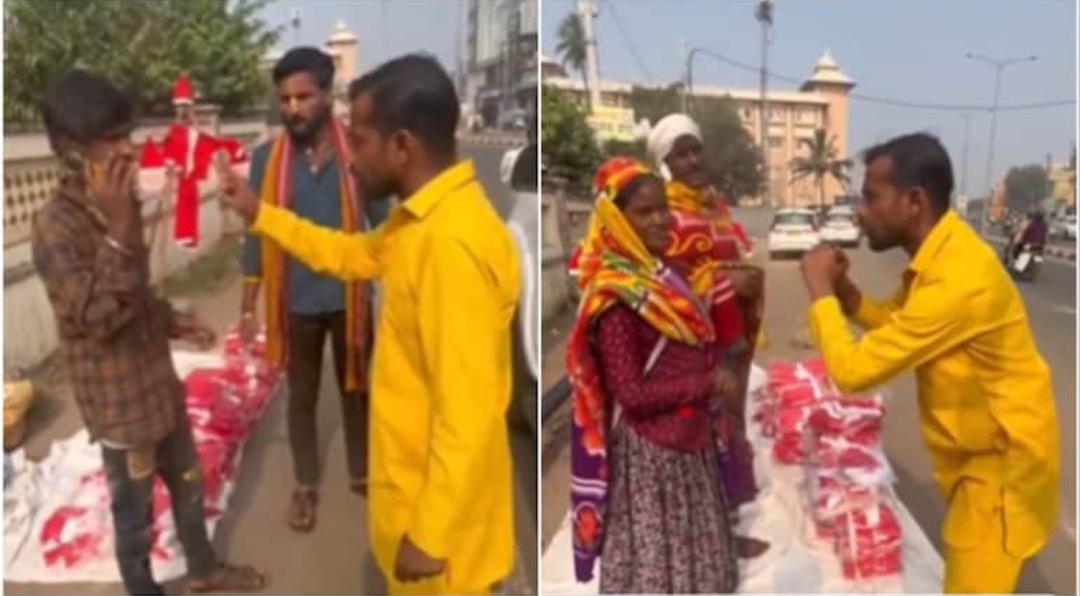
In December 2025, several incidents were reported from Indian states such as Odisha and Gujarat, where individuals selling Santa hats, Christmas trees, and other holiday items were allegedly stopped and verbally harassed by local groups.
One widely shared video from Odisha shows a Christmas goods vendor being confronted in public and told:
“This is a Hindu nation. You cannot celebrate Christmas here.”
The video quickly went viral on social media, drawing criticism from civil society groups and members of the Christian community both inside and outside India.
A Christian street vendor, speaking on condition of anonymity, told local reporters:
“I sell Christmas items every year to support my family. This year, I am afraid to even stand on the roadside. People shout at us, threaten us, and humiliate us in public.”
Several Christian families have also said they are hesitant to celebrate Christmas openly this year due to fear of backlash.
India’s Constitution, under Article 25, guarantees all citizens the freedom to profess, practice, and propagate religion.
Human rights experts emphasize that selling religious or cultural goods and celebrating religious festivals are protected civil rights. Any attempt by private groups to obstruct these activities, they argue, represents a violation of constitutional freedoms—especially when such actions go unchecked.
International human rights organizations, including those based in the United States and Europe, have long monitored the treatment of religious minorities in India.
Previous reports by the U.S. Commission on International Religious Freedom (USCIRF) have noted increasing social pressure and incidents of harassment against minority communities in certain regions of India. Observers say the recent Christmas-related incidents reinforce these long-standing concerns.
India’s central government has not issued any nationwide ban on Christmas celebrations or the sale of related goods. Some state authorities have publicly stated that religious festivals are an integral part of India’s pluralistic tradition.
However, critics argue that the absence of formal bans does not fully address the issue. They question why local intimidation continues and whether authorities are doing enough to protect minority communities at the ground level.
These questions are increasingly being raised not only within India, but also in international media and policy circles.
India has long been known for its religious diversity and coexistence. Yet, when peaceful celebrations like Christmas become a source of fear for a minority community, it raises concerns that extend beyond one religion or festival.
For many observers, the issue is not merely about Christmas goods—it is about the future of religious freedom, tolerance, and equal citizenship in the world’s largest democracy.
The global community is watching closely.