Today November 20, 2025, 03:20 PM
Today November 20, 2025, 03:20 PM
With Thanksgiving on the horizon, and the marathon cooking sessions many undertake about to begin in earnest, one new cookbook is here to challenge some of the assumptions that underlie the holiday — while providing over 100 modern and historic recipes.
By three-time James Beard Award-winning Indigenous chef Sean Sherman, with authors Kate Nelson and Kristin Donnelly, “Turtle Island: Foods and Traditions of the Indigenous Peoples of North America” (Clarkson Potter, $45) provides an in-depth look at the culinary history and traditions of Indigenous people across North America, broken down by geographic region.
Sherman, a member of the Oglala Lakota tribe, is a leader in the movement to rebuild Native American foodways. He started the Indigenous restaurant Owamni in Minneapolis and is the founder and executive director of North American Traditional Indigenous Food Systems (NATIFS).
When it comes to Thanksgiving, the celebration is commonly associated with New England and Indigenous figures like Squanto, he writes. But some of the commonly told aspects of the Thanksgiving story are myths.
“While based on an actual event between English colonizers and members of the Wampanoag Nation, the November holiday as many people celebrate it today actually took shape in the mid-nineteenth century, to help the United States heal after the Civil War.” he writes.
“Like many teachings perpetuated by our education system, these inaccurate history lessons largely disregard the devastating traumas that colonialism wreaked upon the area’s original residents,” he continues. “But against all odds, steadfast cooks, seed keepers, and food sovereignty warriors have strived to maintain connection to their foodways by reviving heirloom varieties and reintroducing important ingredients to their communities.”
This recipe comes from the Southwest, where a variety of wild potato that’s frost- and drought-tolerant known as the Four Corners potato has long been gathered or cultivated.
They’re hard to find commercially, or to grow, but if you find some, “treat them like any other wild food and eat a small amount first before consuming more. If a tuber is especially sour or bitter, it’s best not to eat it,” he writes.
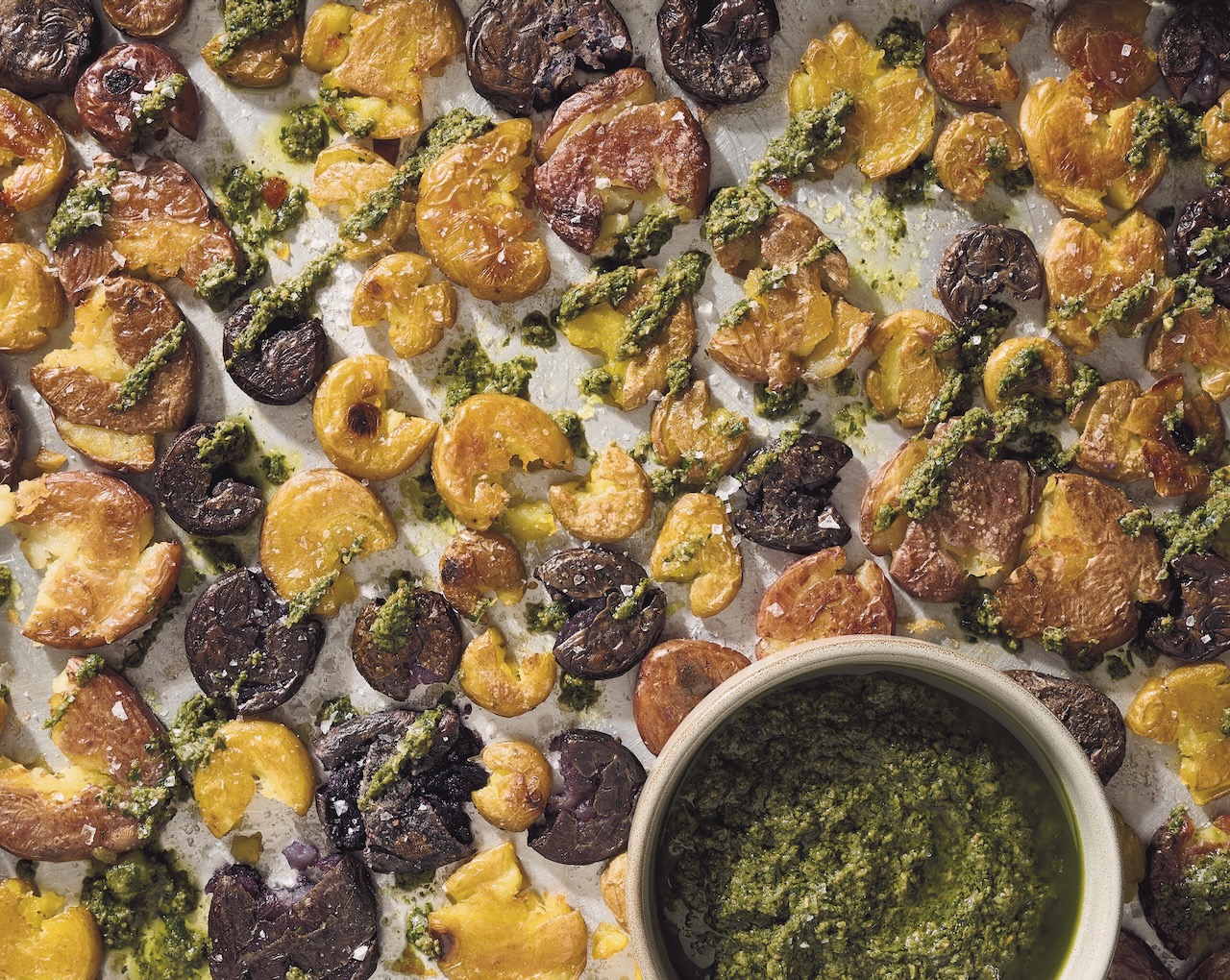
Using this Indigenous potato as inspiration, this recipe features crisp-edged potatoes flavored with a pesto of garlic, pinyon pine nuts and wild greens. “Use the smallest potatoes you can find,” he suggests.
1 1/2 pounds Four Corners potatoes or baby potatoes, scrubbed well
Sea salt
Sunflower oil, for the pan and drizzling
For the wild green pesto:
2 tablespoons pinyon pine nuts or other pine nuts
2 cups packed wild greens, such as lamb’s quarters, common plantain, watercress or wild mustard
1 bulb and greens from wild garlic or 1 small garlic clove
1/2 cup sunflower oil
sea salt
1 tablespoon cider vinegar