Today November 25, 2025, 12:50 PM
Today November 25, 2025, 12:50 PM
By DAVID RISING, Associated Press
BANGKOK (AP) — Rights groups on Tuesday slammed the Trump administration’s decision to end protected status for Myanmar citizens due to the country’s “notable progress in governance and stability,” even though it remains mired in a bloody civil war and the head of its military regime faces possible U.N. war crimes charges.
In her announcement Monday ending temporary protection from deportation for citizens of Myanmar, also known as Burma, Homeland Security Secretary Kristi Noem cited the military’s plans for “free and fair elections” in December and “successful ceasefire agreements” as among the reasons for her decision.
“The situation in Burma has improved enough that it is safe for Burmese citizens to return home,” she said in a statement.
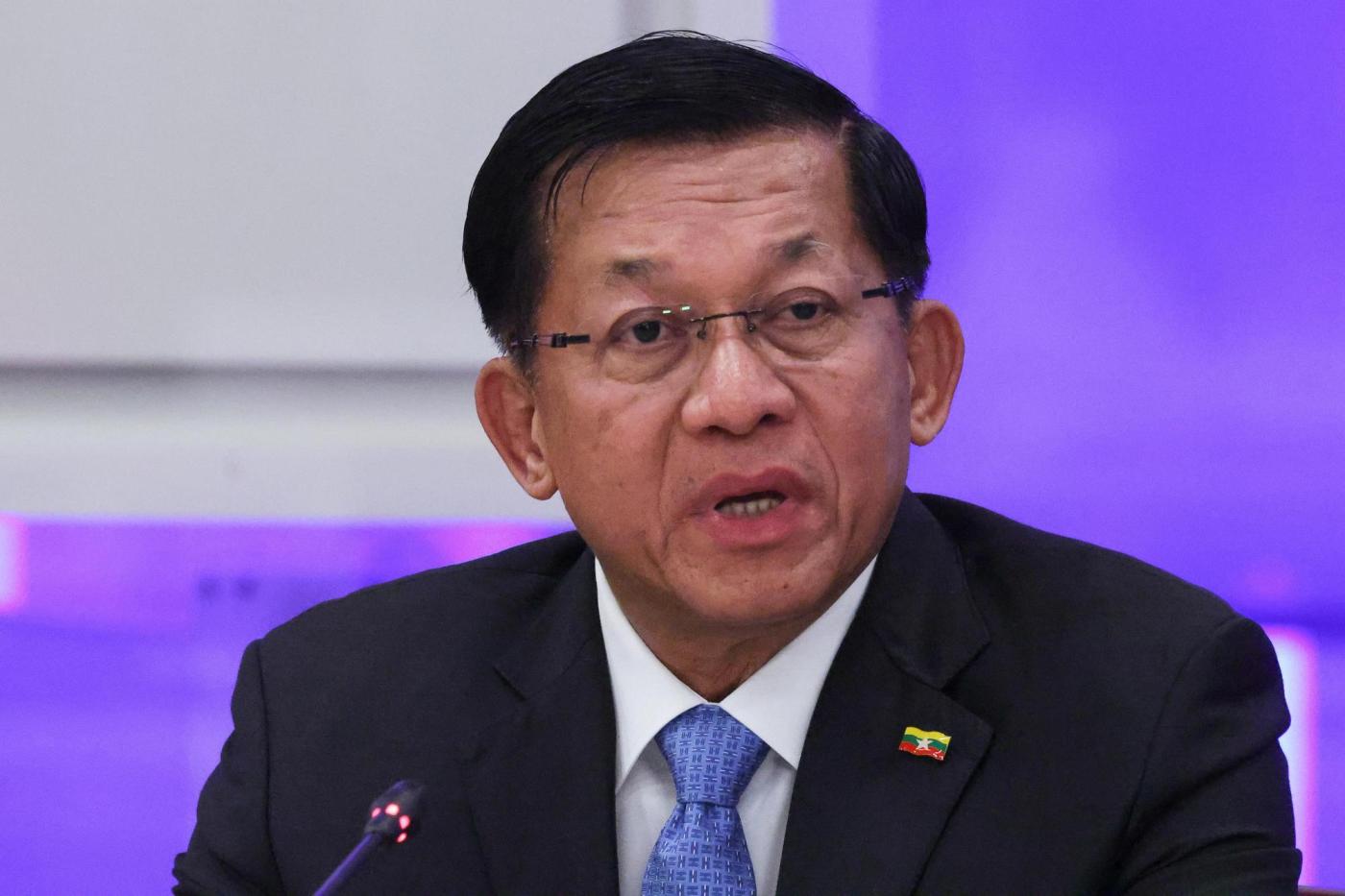
The military under Senior Gen. Min Aung Hlaing seized power from democratically-elected Aung San Suu Kyi in 2021 and is seeking to add a sheen of international legitimacy to its government with the upcoming elections. But with Suu Kyi in prison and her party banned, most outside observers have denounced the elections as a sham.
“Homeland Secretary Kristi Noem is treating those people just like her family’s dog that she famously shot down in cold blood because it misbehaved — if her order is carried out, she will literally be sending them back to prisons, brutal torture, and death in Myanmar,” Phil Robertson, the director of Asia Human Rights and Labor Advocates, said in a statement.
“Secretary Noem is seriously deluded if she thinks the upcoming elections in Myanmar will be even remotely free and fair, and she is just making things up when she claims non-existent ceasefires proclaimed by Myanmar’s military junta will result in political progress.”
The military takeover sparked a national uprising with fierce fighting in many parts of the country, and pro-democracy groups and other forces have taken over large swaths of territory.
The military government has stepped up activity ahead of the election to retake areas controlled by opposition forces, with airstrikes killing scores of civilians.
In its fight, the military has been accused of the indiscriminate use of landmines, the targeting of schools, hospitals and places of worship in its attacks, and the use of civilians as human shields.
An arrest warrant was also requested last year for Min Aung Hlaing by International Criminal Court prosecutors accusing him of crimes against humanity for the persecution of the country’s Rohingya Muslim minority before he seized power.
The shadow National Unity Government, or NUG, established by elected lawmakers who were barred from taking their seats after the military took power in 2021, said it was saddened by Homeland Security’s decision.
NUG spokesperson Nay Phone Latt said the military is conducting forced conscription, attacking civilians on a daily basis, and that the elections were excluding any real opposition and would not be accepted by anybody.
“The reasons given for revoking TPS do not reflect the reality in Myanmar,” Nay Phone Latt told The Associated Press.
In her statement, Noem said her decision to remove the “TPS” protection was made in consultation with the State Department, though its latest report on human rights in Myanmar cites “credible reports of: arbitrary or unlawful killings; disappearances; torture or cruel, inhuman, or degrading treatment or punishment; arbitrary arrest or detention.”
And the State Department’s latest travel guidance for Americans is to avoid the country completely.
“Do not travel to Burma due to armed conflict, the potential for civil unrest, arbitrary enforcement of local laws, poor health infrastructure, land mines and unexploded ordnance, crime, and wrongful detentions,” the guidance reads.
According to the Assistance Association for Political Prisoners, more than 30,000 people have been arrested for political reasons since the military seized power, and 7,488 have been killed.
Still, Homeland Security said that “the secretary determined that, overall, country conditions have improved to the point where Burmese citizens can return home in safety,” while adding that allowing them to remain temporarily in the U.S. is “contrary to the national interest.”
John Sifton, the Asia advocacy director at Human Rights Watch, said that “extensive reporting on Myanmar contradicts almost every assertion” in the Homeland Security statement.
The decision could affect as many as 4,000 people, he said.
“Homeland Security’s misstatements in revoking TPS for people from Myanmar are so egregious that it is hard to imagine who would believe them,” he said in a statement.
“Perhaps no one was expected to.”