Today November 13, 2025, 09:44 PM
Today November 13, 2025, 09:44 PM
By RUSS BYNUM, Associated Press
SAVANNAH, Ga. (AP) — Two months after 300 South Korean nationals were detained and left the U.S. following in an immigration raid at Hyundai’s electric vehicle manufacturing site in Georgia, some of those workers have returned to America to resume those jobs, their employer said Thursday.
The September raid shut down work on a battery plant under construction at the sprawling site near Savannah where Hyundai Motor Group began producing electric vehicles last year. Most of the 475 workers detained were South Korean nationals. U.S. immigration officials said they entered the U.S. with visas that had expired or with visa waivers that prohibited them from working.
The battery plant’s operator, HL-GA Battery Co., said in a statement Thursday that construction has resumed with a mix of new and returning workers. The company thanked the U.S. and South Korean governments, as well as Georgia officials, “for their collaboration in supporting a smooth and timely return.”
“We remain on track to start production in the first half of next year and continue to actively hire local positions to operate the facility,” the battery company’s statement said.
An HL-GA Battery spokesperson, Mary Beth Kennedy, confirmed to The Associated Press that some of the returning workers were among the South Korean nationals detained in September. Kennedy said she did not know how many.
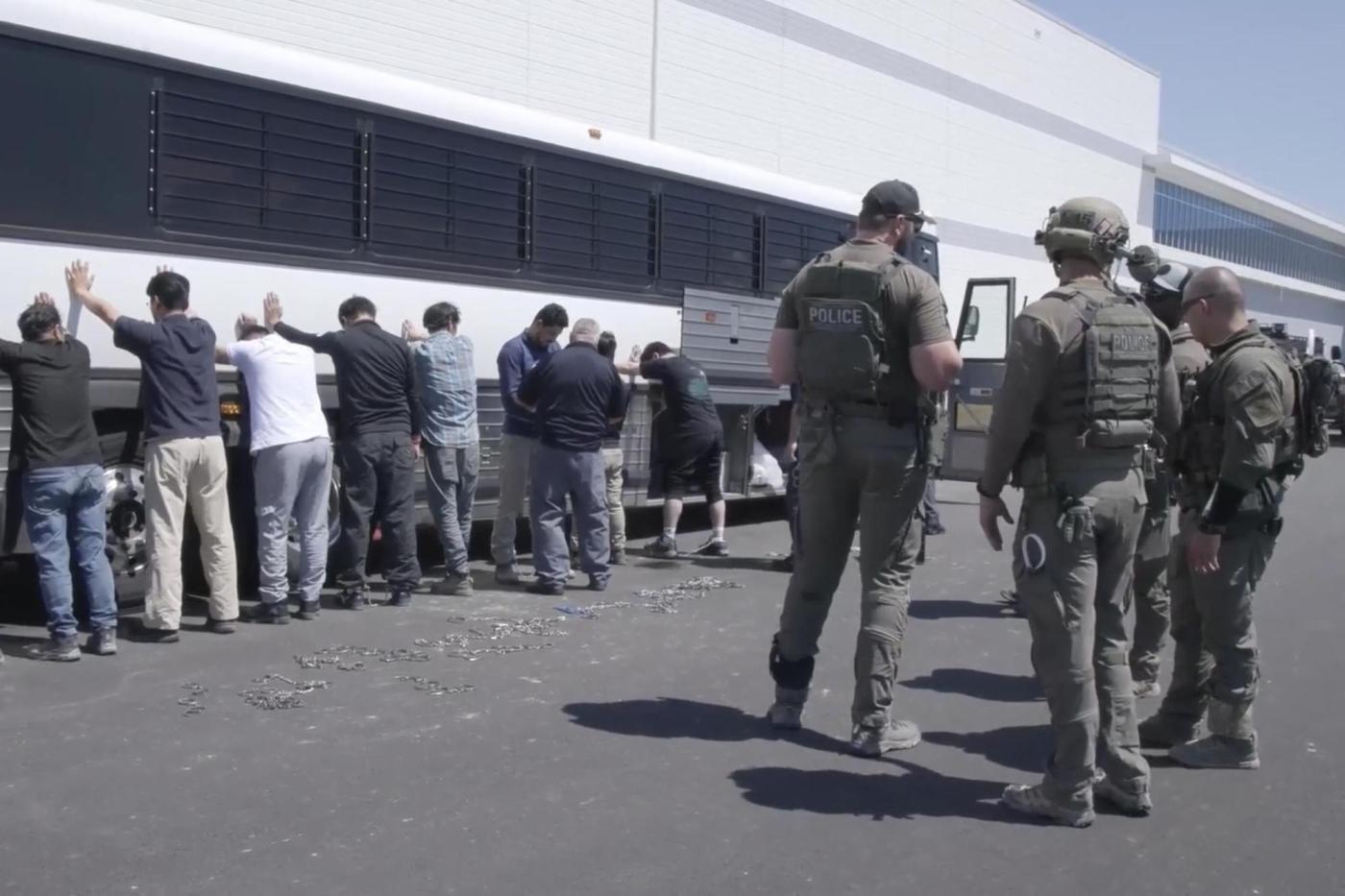
More than 300 South Korean workers were detained in an immigration raid Sept. 4 at the sprawling site where the Hyundai Motor Group produces electric vehicles near Savannah. The workers spent a week at a Georgia detention center before the South Korean government negotiated their release and flew them home.
The roundup by U.S. Immigration and Customs Enforcement, which released video showing some of the detained workers shackled in chains, sparked outrage and feelings of betrayal in South Korea, a key U.S. ally that has pledged hundreds of billions of dollars in American investments.
The Georgia raid targeted one of the state’s largest and most high-profile manufacturing sites, where Hyundai produces electric vehicles at a $7.6 billion plant. The 475 people detained all worked at the battery plant, which will produce batteries to power Hyundai EVs. It is operated by HL-GA Battery, a joint venture by Hyundai and LG Energy Solution.
The South Korean nationals detained in Georgia were largely engineers and other highly skilled workers who came to the U.S. temporarily to install equipment and perform other specialized work to get the battery plant up and running.
It is unclear how many of the formerly detained workers are coming back. Jongwon Lee, an attorney in metro Atlanta, said he has firsthand knowledge of two Korean nationals who plan to return after the U.S. State Department confirmed that their B-1 business visitor visas were still valid.
But Kihwan Kim, president of the Federation of Korean Associations for the Southeast U.S., said some of the workers snared in the raid are hesitant to return to the U.S.
“They don’t have to come to the United States to work after that kind of humiliation,” Kim said. “They can go to other countries.”
President Donald Trump initially defended the immigration raid in Georgia, saying in September that the detained workers “were here illegally,” When asked about those workers again during an October visit to Seoul, Trump said: “I was opposed to getting them out.”