Today November 23, 2025, 08:50 AM
Today November 23, 2025, 08:50 AM
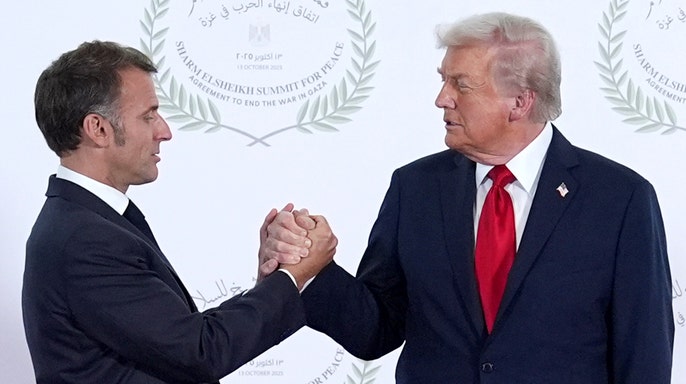
A growing political rivalry is emerging between U.S. President Donald Trump and French President Emmanuel Macron — a clash that reflects two competing visions for global leadership. While Trump continues to push his well-known “America First” agenda, Macron is positioning himself as the voice of a stronger, more independent Europe.
In the early years, Macron tried to build a close relationship with Trump, believing personal diplomacy could influence U.S. decisions. They exchanged warm words, state visits, and symbolic gestures. Over time, however, their partnership shifted into a subtle but serious competition.
Each leader now represents a different direction for Western influence:
Trump wants U.S. dominance, while Macron wants Europe to stand on its own.
Macron is making bold moves to reduce Europe’s reliance on American leadership. His “Europe First” strategy focuses on:
He has been traveling, negotiating deals, and pursuing diplomatic initiatives even when Washington chooses not to get involved — signaling that Europe will not always follow the U.S. lead.
A major example of Europe’s new direction came when Ukraine agreed to buy over a hundred European-made fighter jets instead of American models. This deal highlights Europe’s desire to develop its own defense capabilities without depending on U.S. technology.
Macron has also been taking strong diplomatic positions, including major decisions on global conflicts. These moves often differ from Washington’s approach, creating further distance between the two leaders.
Trump has not remained silent. He has criticized several of Macron’s decisions, especially those that appear to challenge U.S. influence or weaken American leadership.
Yet despite disagreements, both leaders share one view: Europe must take more responsibility for its own security. The debate is not whether Europe should be stronger — but how, and under whose leadership.
While Macron wants to lead Europe toward strategic independence, he faces obstacles at home and across the EU. Political divisions, economic concerns, and rising competition among European countries make it difficult for any single leader to dominate the continent’s direction.
Germany, for example, is rapidly increasing its defense spending and could overshadow France in military leadership in the coming years.
The Trump–Macron rivalry is more than a personal disagreement — it represents a major shift in global power dynamics. As America and Europe redefine their roles, the Western world is entering a new era where alliances are tested, leadership is contested, and influence is divided.