Today December 25, 2025, 05:39 AM
Today December 25, 2025, 05:39 AM
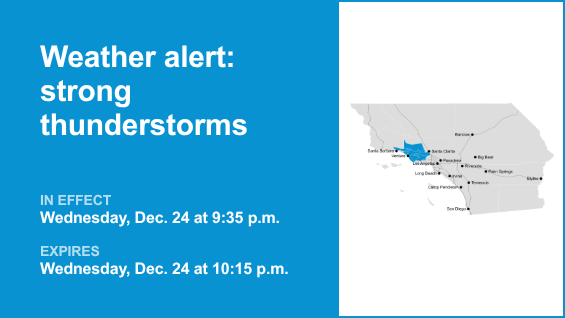
Western Santa Monica Mountains Recreational area, Ventura County Beaches and Ventura County Inland Coast were placed under an updated report for strong thunderstorms by the National Weather Service on Wednesday at 11:32 p.m. The alert is in effect until Thursday Dec. 25, at midnight.
Residents can be ready for wind gusts of up to 50 mph.
“At 11:31 p.m., Doppler radar tracked a line of convective showers near Port Hueneme, or near Oxnard, moving northeast at 25 mph,” the NWS Los Angeles/Oxnard CA said. “Gusty winds could knock down tree limbs and blow around unsecured objects.”
Locations impacted by the alert include Oxnard, Camarillo, Port Hueneme and Naval Base Ventura County.
The NWS said, “If outdoors, consider seeking shelter inside a building.”
Each year, lightning strikes the United States approximately 25 million times, mostly during the summer. It claims the lives of about 20 people annually, according to the NWS. The threat of lightning becomes more pronounced as thunderstorms draw nearer, peaking when the storm is directly overhead and gradually waning as it moves away.
To ensure your safety during a thunderstorm, keep these recommendations in mind:
Lightning safety plan:
Indoors safety measures:
Wait for the all-clear:
When indoor shelter isn’t available:
If you find yourself outdoors without access to indoor shelter during a thunderstorm, take these steps to maximize your safety:
In summary, when facing the threat of lightning, vigilance and preparedness are your best allies. By following these guidelines, you can significantly reduce the chances of lightning-related accidents and prioritize your safety.
When heavy rain strikes, safety is paramount. Equip yourself with these guidelines from the NWS to navigate wet roads and avoid hazards:
Beware of swollen waterways:
Avoid parking or walking in close proximity to culverts or drainage ditches, as the swiftly moving water during heavy rain can potentially carry you away.
Maintain safe driving distances:
Adhere to the two-second rule for maintaining a safe following distance behind the vehicle in front of you. In heavy rain, allow an additional two seconds of distance to compensate for reduced traction and braking effectiveness.
Reduce speed and drive cautiously:
If it is raining and the roads are wet, slow down. Take your foot off the accelerator and let your speed drop gradually. Never use the brakes suddenly because this may cause the car to skid.
Choose your lane wisely:
Stay toward the middle lanes – water tends to pool in the outside lanes.
Prioritize visibility
Enhance your visibility in heavy rain by activating your headlights. Be particularly vigilant for vehicles in blind spots, as rain-smeared windows can obscure them.
Watch out for slippery roads:
Be extra careful during the first half hour after rain begins. Grime and oil on the road surface mix with water to make the road slippery.
Keep a safe distance from large vehicles:
Don’t follow large trucks or buses too closely. The spray created by their large tires reduces your vision. Take care when passing them as well; if you must pass, do so with caution.
Mind your windshield wipers:
Overloaded wiper blades can hinder visibility. If rain severely impairs your vision, pull over and wait for conditions to improve. Seek refuge at rest areas or sheltered spots.
If the roadside is your only option, pull off as far as possible, preferably past the end of a guard rail, and wait until the storm passes. Keep your headlights on and turn on emergency flashers to alert other drivers of your position.
In the face of heavy rain, these precautions can make a significant difference in ensuring your safety on the road. Remember to stay informed about weather conditions and heed guidance from local authorities for a secure journey.
For more local weather alerts, visit our Weather Advisory page